Cal88 said:
BearlySane88 said:
Cal88 said:
BearlySane88 said:
Cal88 said:
BearlySane88 said:
Cal88 said:
Another reason global demand for oil will drop in the 2030s.
Not according to OPEC.
https://publications.opec.org/woo/chapter/142/2640
The IEA estimates only a minor drop off from 102 mb/d in 2030 to 100 mb/d in 2045 based off of stated policy changes. If you look at current policy based estimations, the IEA actually sees a growth in oil demand from 102 mb/d in 2030 to 105 mb/d in 2035, 108 mb/d in 2040, and up to 113 mb/d by 2050.
https://iea.blob.core.windows.net/assets/dfe5daf4-dbc1-4533-abeb-fafb1faee0f9/WorldEnergyOutlook2025.pdf
The IEA has also recently walked back some of its more aggressive predictions for oil.
https://cleantechnica.com/2025/12/22/peak-oil-is-not-dead-reviewing-the-ieas-world-energy-outlook-for-2025/
https://www.sightlineclimate.com/research/iea-pulls-the-plug-on-peak-oil
70% of global oil consumption is for transportation, with Asia accounting for the largest demand bloc.
The ICE vehicle fleet in Asia and much of the world is gradually being replaced by EVs.
Even as EVs gain traction, the pace of replacing ICE vehicles remains too slow to dent transportation-related oil use substantially. Global oil demand is forecast to rise by 860,000 b/din 2026.
https://www.reuters.com/business/energy/iea-trims-global-oil-market-surplus-forecast-2026-2025-12-11/
Asia's oil demand growth is projected to remain stagnant at just 1% in 2026, but this still translates to incremental volumes that EVs alone can't fully displace.
Also, not all transportation segments are set up for rapid electrification, limiting the impact on the 70% of oil used for mobility. While passenger cars see EV progress, aviation, shipping, heavy-duty trucks, and buses face technological and infrastructural hurdles that keep them reliant on petroleum. For example, road transportation and aviation are expected to drive much of the medium-term demand increase, adding around 13 million b/d globally between 2020 and 2045, 90% from those subsectors. Even optimistic forecasts suggest oil use for transportation might only plateau or decline modestly after 2026.
https://www.library.hbs.edu/working-knowledge/could-global-demand-for-oil-peak-in-2026
EV adoption in Asia and developing markets is uneven and there are barriers that slow the replacement of ICE fleets. While countries like Vietnam (40% EV share of new car sales in 2025), Thailand (20%), and Indonesia (15%) show it's possible on small scales, these are from low bases, and regional averages are far behind those numbers. Southeast Asia hit just 13% EV sales share in 2024.
Transportation is still over 90% oil-powered globally.
That Harvard report is from 2023 already is obsolete, does not account for the fundamental changes in the auto industry coming out of China which only hit the global market very recently.
By 2030, the great majority of the Chinese auto park will be EVs, and countries like Brazil, Australia, Spain, the ASEAN countries will follow that trend 5 years behind. In every country around the world with no trade barriers, EV sales are growing at very fast rates.

^This scenario from one study is a bit too optimistic wrt the timing, but the trend is certainly there.
I didn't say global oil demand is crashing, rather that it is peaking later this decade and will taper off thereafter. That decline will probably be slow because as demand falls, so will oil price, and low oil price will in turn prolong the use of ICE.
However, the writing is on the wall. Battery tech is still not mature and EVs already are more competitive than ICEs in terms of price and performance.
You're still leaving out all developing countries that will heavily rely on oil and not electric because there is no infrastructure for it.
All my links in my first response are updated from December 2025 showing that it's a very "optimistic" view that oil demands will dip by 2030.
Most developing countries energy production curves show that their energy infrastructure has been growing fast:
https://www.geni.org/globalenergy/library/energy-issues/index.shtml
There are about 200 nuclear powerplants being built or planned today, and the majority of those are in developing countries.
For countries that have to import oil in particular, the push towards EVs makes sense. This was one of the main reasons China, the world's largest oil importer, went all in. Even for a country like Saudi Arabia it makes sense to use a mix of solar, nuclear and natural gas to power their vehicles and export their oil instead.
I clicked on your link, and then Spain. This big chart shows that energy consumption has been increasing over time, yet each new technology (hydro, nuclear, solar) has been additive to the baseline of coal. Coal, the oldest, didn't go away.
That's the point of the environmentalist video I mentioned above. And he said we need to therefore not get carried away in a false belief that the
electrotech revolution will save us from the perils of global warming (which I know you don't believe in), but prepare for the unfortunate consequences of this upcoming new global reality.
As to your point, absolutely EV's make more sense, and developing nations get to play leapfrog on the technology curve - for instance, they didn't have to build out phone land lines everywhere, they got to just install a few towers to cover wide areas.
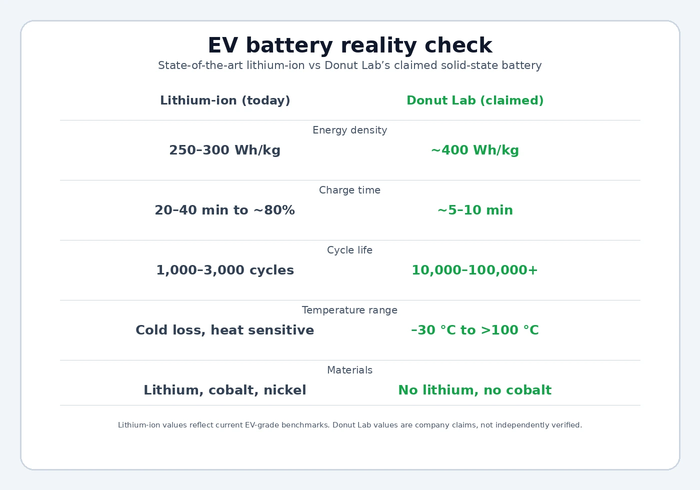
This Donut battery - super capacitor is a MASSIVE advancement in global energy technology, if true.
I started this thread because though it's publicly unproven and therefore hearsay and rumor and speculation, if what they claim IS true? OMG, the ramifications are MASSIVE.
MASSIVELY GOOD FOR MANKIND
We cannot imagine what such a leap forward would mean. Which is why everyone is saying this is false, can't be, a farce.
Stay tuned.